Commercial Property
How much does commercial property insurance cost in California?
What shapes a California commercial building's insurance cost: wildfire exposure, surplus lines and FAIR Plan options, earthquake and deductibles.
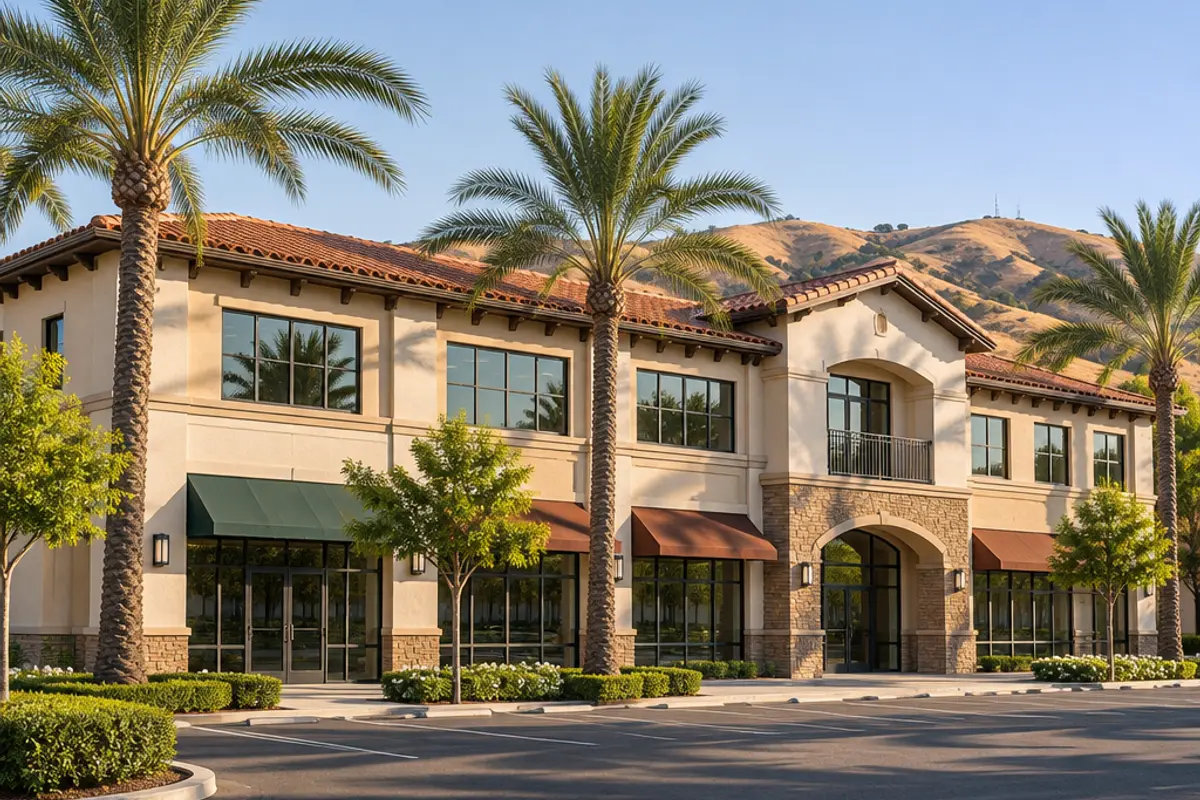
The cost of insuring a California commercial building depends less on a statewide average than on three things: whether a standard insurer will write the building at all, how much wildfire exposure an underwriter sees, and which coverages you buy separately, such as earthquake. Two buildings with the same purchase price can come back with very different quotes. The useful comparison is a set of real proposals for your building, built on the same values and coverage.
Burch Insurance Group compares commercial property options for apartment, retail, office and mixed-use buildings in California. Licensed in California, License #4375165.
Is commercial property insurance getting cheaper?
Nationally, there are signs of a softer market. The Council of Insurance Agents & Brokers reported an average commercial property premium decrease of 6.3% in its second-quarter 2026 survey. That is a national average, not a California rate index. Wildfire losses and higher rebuilding costs have pushed many insurers to charge more or pull back in California, so an individual building can still see an increase. A falling national average is a good reason to compare, not a promise of savings.
Where your quote comes from changes the price
- Standard (admitted) insurer: usually the first choice when one will write the building. Rates and forms are filed with the state.
- Surplus lines insurer: can write buildings standard insurers decline. Forms vary more, and these insurers do not take part in California's guarantee funds. Read the exclusions and deductibles, not only the premium.
- California FAIR Plan: the insurer of last resort. Since 2025 its commercial property limits reach up to $20 million per building and $100 million per location, but coverage is narrower than a full commercial policy. It usually fills a gap rather than replacing a complete program.
A cheaper FAIR Plan premium paired with separate policies for what it leaves out can cost more in total than one broader surplus lines policy, or less. Compare the whole package. Our California commercial building quote page explains each option in more detail.
Earthquake is priced separately
Standard commercial property policies generally exclude earthquake. If you or your lender want it, it is quoted on its own, often with a percentage deductible. As a hypothetical example, a 10% earthquake deductible on a building insured for $3 million would mean the first $300,000 of an earthquake loss is yours. Ask for the premium at more than one deductible so you can see the tradeoff.
How much can a deductible change the comparison?
These two proposals are hypothetical illustrations for the same $3 million building, not market quotes.
| Item | Proposal A | Proposal B |
|---|---|---|
| Annual premium | $24,000 | $20,500 |
| All-other-perils deductible | $10,000 | $25,000 |
| Earthquake | Not included | Not included |
| Annual premium difference | Reference | $3,500 lower |
Proposal B saves $3,500 a year but leaves you paying $15,000 more on every covered claim. That can be a sensible choice for an owner with reserves. It should be a deliberate one.
What you can do to improve the price
Documented roof work, cleared vegetation, ember-resistant vents and current replacement-cost values all help an underwriter see the building accurately. They do not guarantee a quote or a lower premium, but a submission without them is easier to decline.
Use the notice period
For many commercial policies, California requires the insurer to send a nonrenewal notice at least 60 days, and no more than 120 days, before the policy ends. Start comparing as soon as the notice or renewal arrives. Waiting until the last two weeks leaves fewer insurers willing to look.
What to send for an accurate quote
- Current policy and renewal offer or nonrenewal notice
- Building address, construction, year built, square footage and occupancy
- Roof type and the year it was replaced, plus electrical and plumbing updates
- Five years of loss history
- Rent roll or business income figures, and any mitigation records
Questions California owners ask us
Why did my premium go up when the news says rates are falling? National surveys average many buildings and states. Your quote reflects your building's wildfire exposure, roof, values and the insurers still writing in your area.
Is the FAIR Plan the cheapest option? Not always, once you add the coverage it leaves out. Compare the full set of policies you would need.
Do I need an office in California to work with you? No. Burch Insurance Group is licensed in California and works with owners by phone and online.
Request a California commercial property quote, or call 612-712-6407.
Burch Insurance Group is licensed in California, License #4375165.
Sources
- CIAB Q2 2026 P&C Market Survey (checked 2026-10-16)
- California Insurance Code section 678.1 (commercial nonrenewal notice) (checked 2026-10-31)
- California Department of Insurance, FAIR Plan commercial expansion, March 28, 2025 (checked 2026-10-31)
Related resources
Continue reading

Commercial Property Coinsurance and Agreed Value
Understand coinsurance on a commercial building quote, why a partial loss can be reduced, and what to ask about agreed value before choosing a policy.
Read more →
Blanket vs Separate Commercial Building Limits
Compare blanket and separate commercial building insurance limits, location restrictions and rental income before renewing a property portfolio.
Read more →
Commercial building insurance quote in California
Nonrenewed or facing a big increase on a California commercial building? Compare standard, surplus lines and FAIR Plan options with a licensed California agency.
Read more →