Commercial Property
Insurance for older commercial buildings: make the building's condition count
Compare insurance for an older commercial building using documented updates, roof and valuation terms, ordinance or law coverage and deductibles.

An older commercial building can still be a good insurance risk. Its age is only part of the story. Roof condition, electrical and plumbing updates, occupancy, maintenance and loss history help explain what an insurer is being asked to cover today.
Burch Insurance Group helps commercial building owners in Minnesota and New Mexico compare insurance across a broad spectrum of markets. We can help present documented improvements and compare available terms, including the valuation, deductibles and building-specific provisions that can make two similar-looking quotes very different.
What information makes an older building easier to evaluate?
Start with the building's construction type, size, current use and occupancy. Then distinguish original components from updates. “Updated electrical” is more useful when the submission explains what was replaced, when it was completed and what documentation is available.
Useful records can include roof invoices, inspection reports, permits, photographs and maintenance information. If only part of a system was updated, describe the actual scope. The goal is an accurate picture, not a claim that the entire building is new.
Disclose known deficiencies, outstanding recommendations and planned repairs. If a previous loss has been repaired, include the repair information and any steps taken to prevent a repeat problem.
Replacement cost, actual cash value and roof terms are separate questions
Replacement cost and actual cash value are different settlement approaches. Actual cash value generally accounts for depreciation, while replacement cost coverage is subject to its own requirements and conditions. Neither label should be read without the relevant policy provisions.
A policy may treat a roof differently from other building property. Ask whether roof losses are subject to a schedule, depreciation, cosmetic damage exclusion or other special terms. A replacement cost building limit does not automatically answer every roof question.
Also review how the building value was established and whether coinsurance applies. The market price of a property, its tax assessment and its rebuilding cost serve different purposes. An inexpensive acquisition can still involve a costly reconstruction.
Ordinance or law coverage deserves a specific review
After covered damage, local requirements can affect what must be demolished, rebuilt or upgraded. Ordinance or law coverage may address certain additional costs, depending on the policy and selected limits.
Ask about three distinct issues: loss involving an undamaged portion of the building, demolition costs, and increased costs of construction. Do not assume that a single mention of ordinance or law provides all three without limitation.
Equally, do not conclude that coverage is absent simply because it is not obvious on the declarations page. Coverage may appear in forms or endorsements. Have the actual policy reviewed before making that judgment.
Compare the amount you retain after a loss
| Policy detail | What an owner should understand |
|---|---|
| Wind and hail deductible | Whether it is a dollar amount or percentage and how it applies |
| Roof settlement | Whether age or a schedule changes the payment basis |
| Water-related losses | Which water exposures are covered, excluded or separately limited |
| Rental or business income | The covered trigger, waiting period, amount and restoration period |
| Protective requirements | Conditions involving alarms, sprinklers, heat or other safeguards |
| Vacancy and renovation | Whether the current use and planned changes are accepted |
A lower premium can be useful, but it should be weighed against these terms. The incumbent insurer may remain competitive; another market may offer a better fit. The answer comes from comparing available proposals on a consistent description of the property.
Can building improvements help with insurance?
Documented improvements can change how a market evaluates the risk, but they do not guarantee a discount or acceptance. Before undertaking work solely for insurance purposes, discuss the planned scope with your agent and confirm any insurer requirements.
For work you already intended to do, keep records and provide them at renewal. A submission that still lists an obsolete roof or electrical system can fail to show the building as it exists today.
If substantial renovation is planned, review construction coverage before work begins. The existing structure and the new work need a coordinated arrangement, particularly when the building is partly occupied or temporarily vacant.
Ask BIG for a building-specific comparison
Request an older commercial building insurance review, or call 612-712-6407. Send the address, current policy, renewal date and any recent improvement records. BIG can help compare the available options and explain the differences that affect your building, rather than reduce the decision to age or premium alone.
For background on valuation, see Minnesota Commerce's commercial property insurance guidance.
Sources
- Minnesota Commerce: property insurance (checked 2026-10-16)
- NAIC insurance guidance (checked 2026-10-16)
Related resources
Continue reading
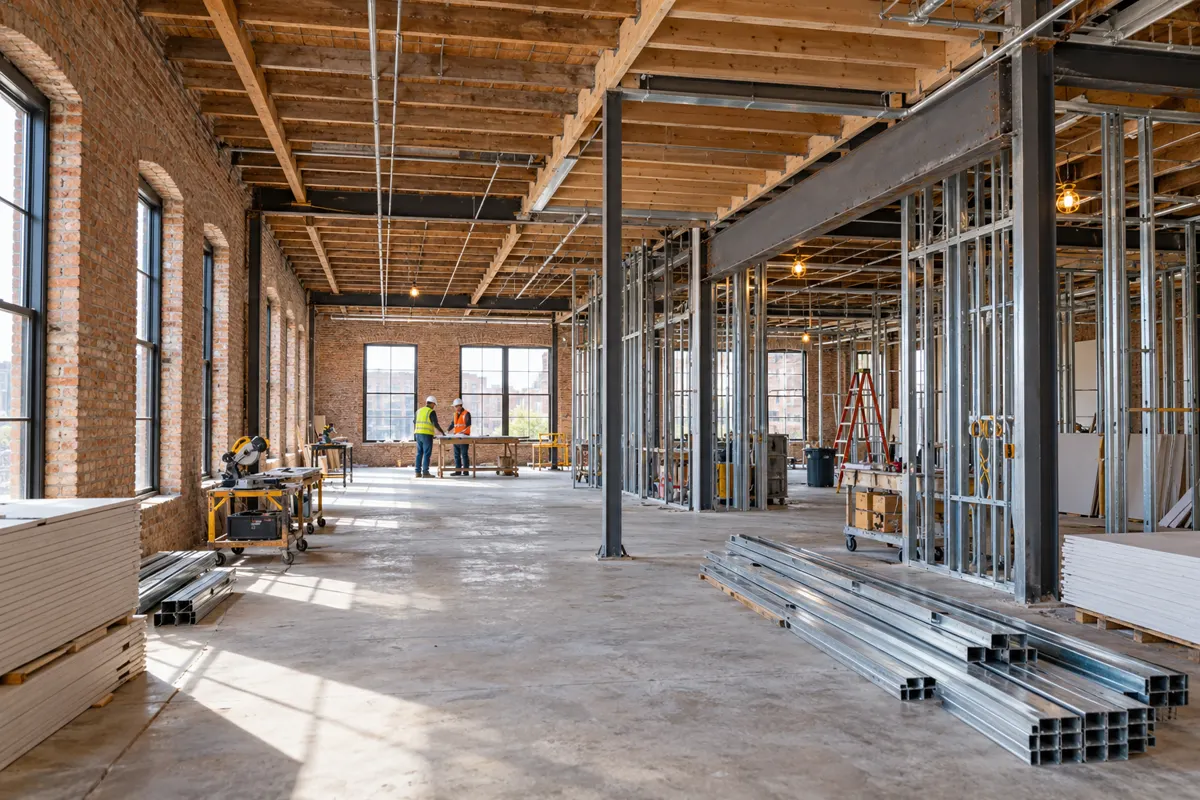
Commercial Building Renovation Insurance
Plan insurance for the existing building and new renovation work. BIG helps Minnesota and New Mexico owners compare commercial project coverage.
Read more →
Apartment Insurance Premium Increase? Compare Options
Compare apartment building insurance after a premium increase. BIG reviews available markets, roof terms, deductibles and rental income coverage.
Read more →
Received a nonrenewal notice?
Received a commercial property nonrenewal notice? See what Minnesota building owners should gather, compare and confirm before the policy ends.
Read more →
Commercial Property Insurance Cost in Minnesota
Compare Minnesota commercial property insurance costs with the coverage behind the price: building values, roof terms, deductibles and available markets.
Read more →
Insuring a New Mexico building
A practical starting point for reviewing construction, weather exposure, and policy terms.
Read more →