Contractors
Arizona contractor insurance quote: license requirements, liability and workers' comp
Arizona contractors need an ROC license with a bond sized by classification and volume, and must attest to workers' comp compliance. BIG quotes liability and workers' comp to fit your contracts.
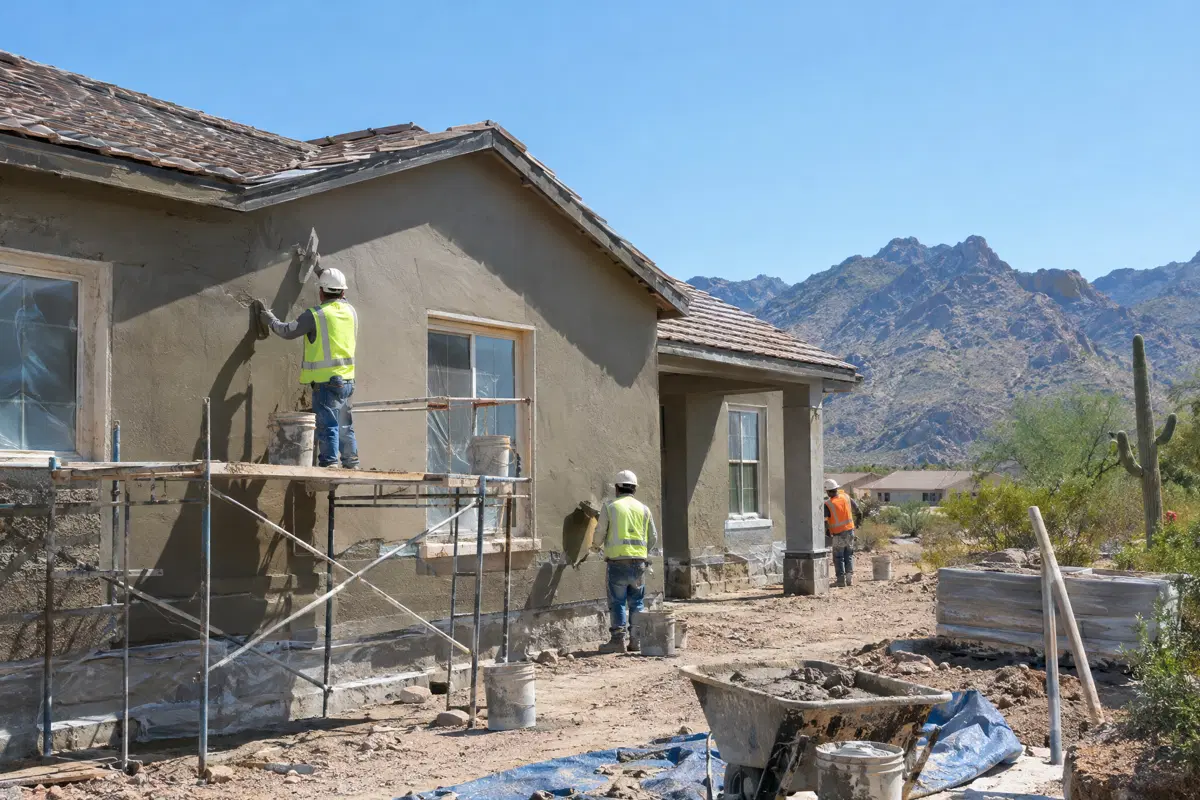
If you are a contractor in Arizona and need an insurance quote, start by knowing your Registrar of Contractors (ROC) license classification, whether you have employees, and what your general contractors or clients require on a certificate. Burch Insurance Group quotes general liability, workers' compensation and related coverage for Arizona contractors, from a specialty trade in Tucson to a commercial builder in the Phoenix area, and can help line up the license bond.
or call 612-712-6407. Licensed in Arizona.
Do I need an Arizona contractor license?
The ROC says any business that contracts or offers to contract to build, alter, repair or do similar work must be licensed, and that includes subcontractors. There is a narrow handyman exemption in A.R.S. 32-1121 for work of a casual or minor nature where the total contract price is less than $1,000, including labor and materials. It does not apply if the work needs a local building permit or is part of a larger project split into smaller contracts, and anyone using it must say "not a licensed contractor" in their advertising. It also does not cover fire safety work or connections to gas or other fuel supplies.
Which license classification fits my work?
Arizona law sorts licenses into general commercial, general dual, general engineering, general residential, specialty commercial, specialty dual and specialty residential contracting (A.R.S. 32-1102). The ROC's application page lists examples such as B-1 General Commercial Contractor, B-2 General Small Commercial Contractor and the KB-1 and KB-2 dual classifications. Dual licenses cover both residential and commercial work.
Each license needs a qualifying party. Under A.R.S. 32-1122, that person generally needs at least four years of practical or management experience in the trade, at least two of them within the last ten years, and must pass the required exams. The ROC says the Statutes and Rules Exam cannot be waived and a passing score is 70 percent. The applicant and qualifying party also complete background checks.
What bond does the ROC require?
Every license needs a bond on file with the ROC, sized by license type and expected annual volume. The ROC lists these amounts:
- Residential general: $9,000 under $750,000 in annual volume, $15,000 at $750,000 or more
- Residential specialty: $4,250 under $375,000, $7,500 at $375,000 or more
- Commercial general, including general engineering: from $5,000 at $150,000 or less up to $100,000 over $10 million
- Commercial specialty: from $2,500 at $150,000 or less up to $50,000 over $10 million
- Dual licenses: the residential and commercial amounts added together
The bond can be a surety bond or a cash deposit. Residential and dual licensees also pay into the ROC's Residential Recovery Fund or post a $200,000 bond instead. The license bond protects the public under the statute; it is not liability insurance for your business.
Do Arizona contractors have to carry workers' compensation?
To get an ROC license, the applicant must attest to compliance with Arizona's workers' compensation laws, and if coverage is required, the attestation must include the policy number (A.R.S. 32-1122). The ROC application puts it simply: in general, if you have any employees, you must have workers' compensation insurance.
The Industrial Commission of Arizona says coverage is required for employees regardless of how many you have, including part-time workers. A sole proprietor with no employees does not have to cover himself or herself. Corporations must cover employees, including officers and working shareholders who own less than 50 percent, and an LLC with employees must cover them, including members. Independent contractors are not required to be covered, but the ICA says the decision depends on all the facts.
Subcontractors are where contractors get caught. Under A.R.S. 23-902, if you hire a contractor whose work you supervise or control and the work is part of your business, that contractor's workers can be treated as your employees. A dated, signed independent contractor agreement with the disclosures the statute lists creates a rebuttable presumption of an independent relationship, but it is not a substitute for collecting certificates. The ICA can seek civil penalties and a court order to stop an uninsured employer from operating.
What will general contractors and clients ask for?
Most Arizona general contractors, property owners and public agencies set insurance terms in the contract. Expect requests for:
- A certificate of insurance before you start, often with the project named
- Additional insured status for the GC and owner on your general liability, sometimes for completed operations too
- Waiver of subrogation on general liability and workers' compensation
- Primary and noncontributory wording
- Specific limits, and sometimes an umbrella
Send us the insurance section of the contract before you sign. A policy can be quoted to fit it, but endorsements are easier to add before the job than after.
What BIG needs to quote
Send your ROC license number and classification, the entity type, a description of the work you do and the share that is residential versus commercial, annual revenue and payroll, the number of employees and how much you pay subcontractors, your current policies and five years of losses, and any contract insurance requirements you need to meet.
If you also build or renovate, our guides to builders risk insurance and insurance during a building renovation cover the property side of a project.
Questions Arizona contractors ask us
Does the ROC require general liability insurance to get a license? The ROC licensing requirements we reviewed focus on the bond and the workers' compensation attestation. Your general liability needs usually come from contracts and clients, and most GCs will not let you on site without it.
I am a sole proprietor with no employees. Do I need workers' comp? Arizona does not require a sole proprietor with no employees to cover himself or herself. Many GCs still ask for a certificate or a policy, so check your contracts.
Can my subcontractors' workers end up on my policy? Yes, it can happen. Under A.R.S. 23-902, workers of a contractor you supervise or control can be treated as your employees, and your workers' comp insurer may charge for uninsured subcontractors at audit. Collect current certificates.
Do I need an agent with an Arizona office? No. Burch Insurance Group is licensed in Arizona and works with Arizona contractors by phone and online.
Get your quote started
Request a contractor insurance quote, or call 612-712-6407.
Sources
- Arizona Registrar of Contractors, Applying for a License (checked 2026-11-04)
- Arizona Registrar of Contractors, Bond Information (checked 2026-11-04)
- Arizona Registrar of Contractors, Sole Proprietorship License Application (RC-L-200A) (checked 2026-11-04)
- A.R.S. 32-1102, classification of contractor licenses (checked 2026-11-04)
- A.R.S. 32-1121, persons not required to be licensed (checked 2026-11-04)
- A.R.S. 32-1122, qualifications for license (checked 2026-11-04)
- A.R.S. 23-902, employers subject to workers' compensation (checked 2026-11-04)
- Industrial Commission of Arizona, workers' compensation coverage FAQs (checked 2026-11-04)
Related resources
Continue reading

Commercial Construction Builders Risk Insurance
Compare builders risk for ground-up commercial projects in Minnesota and New Mexico, including project values, materials, delay and occupancy terms.
Read more →
Commercial Building Renovation Insurance
Plan insurance for the existing building and new renovation work. BIG helps Minnesota and New Mexico owners compare commercial project coverage.
Read more →